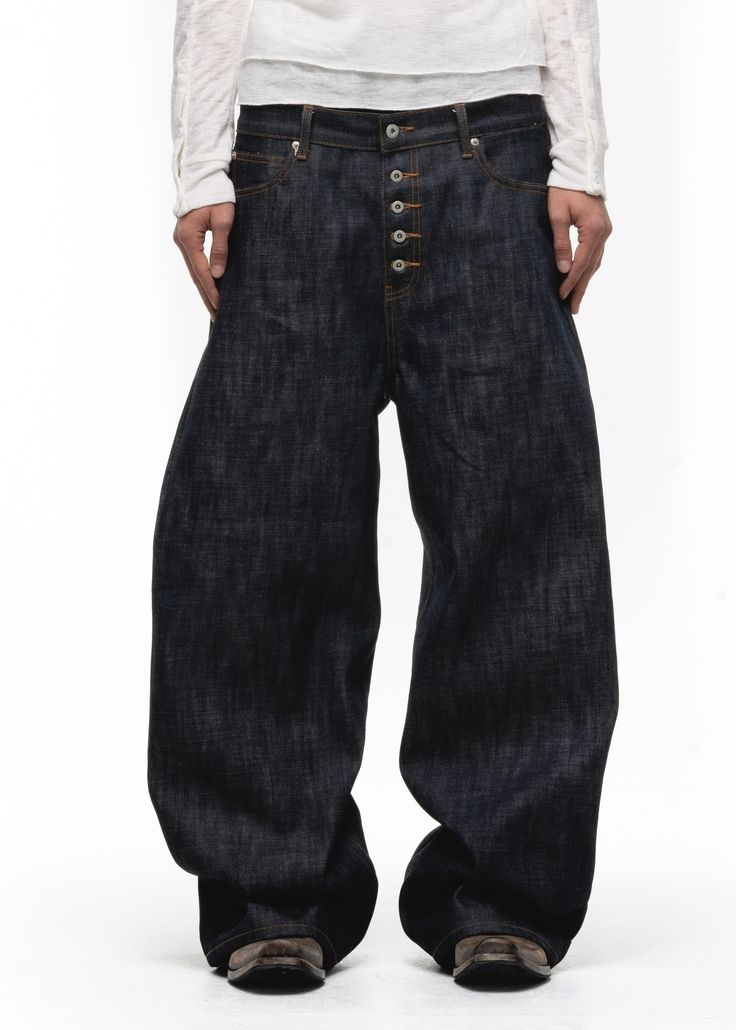
Raw denim — or raw denim — is undergoing a rebirth. And it’s not a passing fad. At a time when the textile industry is dominated by immediacy, overproduction and short-use garments, more and more consumers are looking for exactly the opposite: durability, authenticity and pieces that tell a story.
The problem is that, despite its growing popularity, many people still don’t know what makes raw denim special or why it has become a symbol of quality.
What exactly is raw denim?
Most of the jeans that we find today in the stores have gone through industrial processes: washed, worn, softened or dyed to achieve a “perfect” appearance from the first day. They are comfortable at first, yes, but they are also pieces that lose shape quickly and have a limited useful life.
Raw denim is quite the opposite:
- It is not washed or treated after making.
- It maintains the original rigidity and structure of the fabric.
- It adapts to your body with use, creating unique brands.
- It improves over time, just like a good leather.
It is a piece that evolves with you. Every fold, every wear and tear and every shadow is the result of your movement, your everyday life and your lifestyle
Why are you coming back so hard?
Because today’s consumer is tired of uniformity. He wants pieces that last, that have personality and that are not interchangeable with any other.
The raw denim represents:
- Authenticity in a world of artificial pieces.
- Durability in the midst of accelerated consumption.
- Identity in an industry saturated with ephemeral trends.
It is a reminder that quality still matters. That fashion can be an investment, not a discardable one.
In a world where many pieces last for months, raw denim is a statement:
clothing can – and should – last for years.